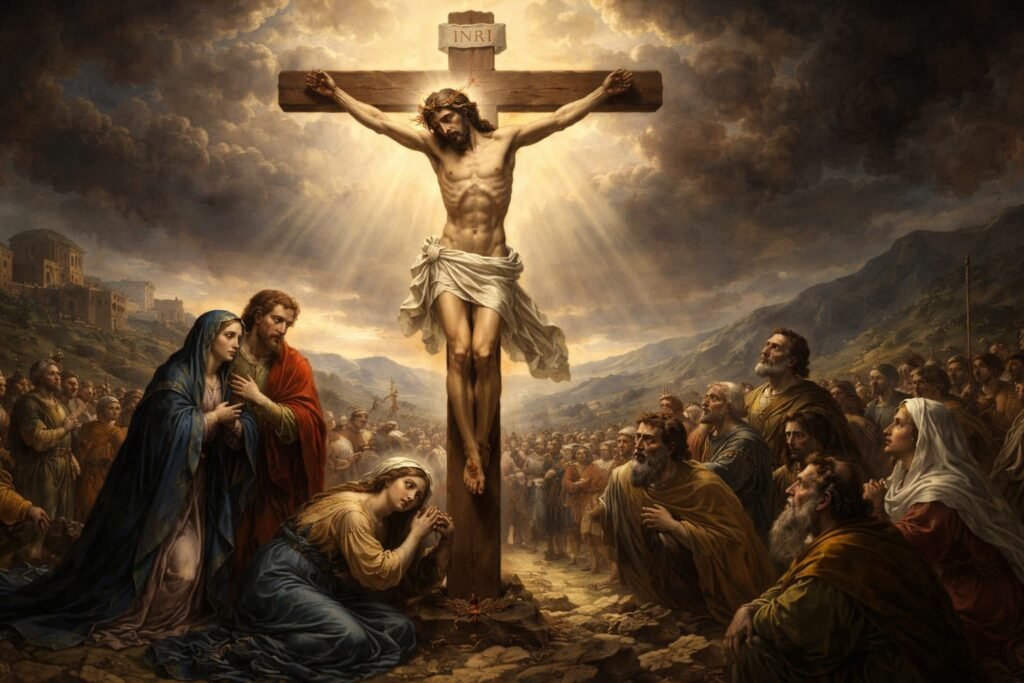
Among all the symbols associated with Christianity, none is more central, more powerful, or more misunderstood than the cross. It stands at the heart of the Christian message. Churches display it. Believers wear it. Hymns celebrate it. Yet the true meaning behind the cross is often reduced to sentiment, tradition, or cultural symbolism. In reality, the cross represents something far deeper. It reveals the justice of God, the seriousness of human sin, and the extraordinary depth of divine love.
Many people ask an important question: Why was the cross necessary? If God is loving and merciful, why could He not simply forgive humanity? Why did the death of Christ have to occur? Could salvation not have been accomplished in another way?
These questions are not new. They have been asked throughout centuries by theologians, philosophers, sceptics, and believers alike. Understanding the necessity of the cross requires us to examine the nature of God, the condition of humanity, and the meaning of sacrifice within the biblical narrative.
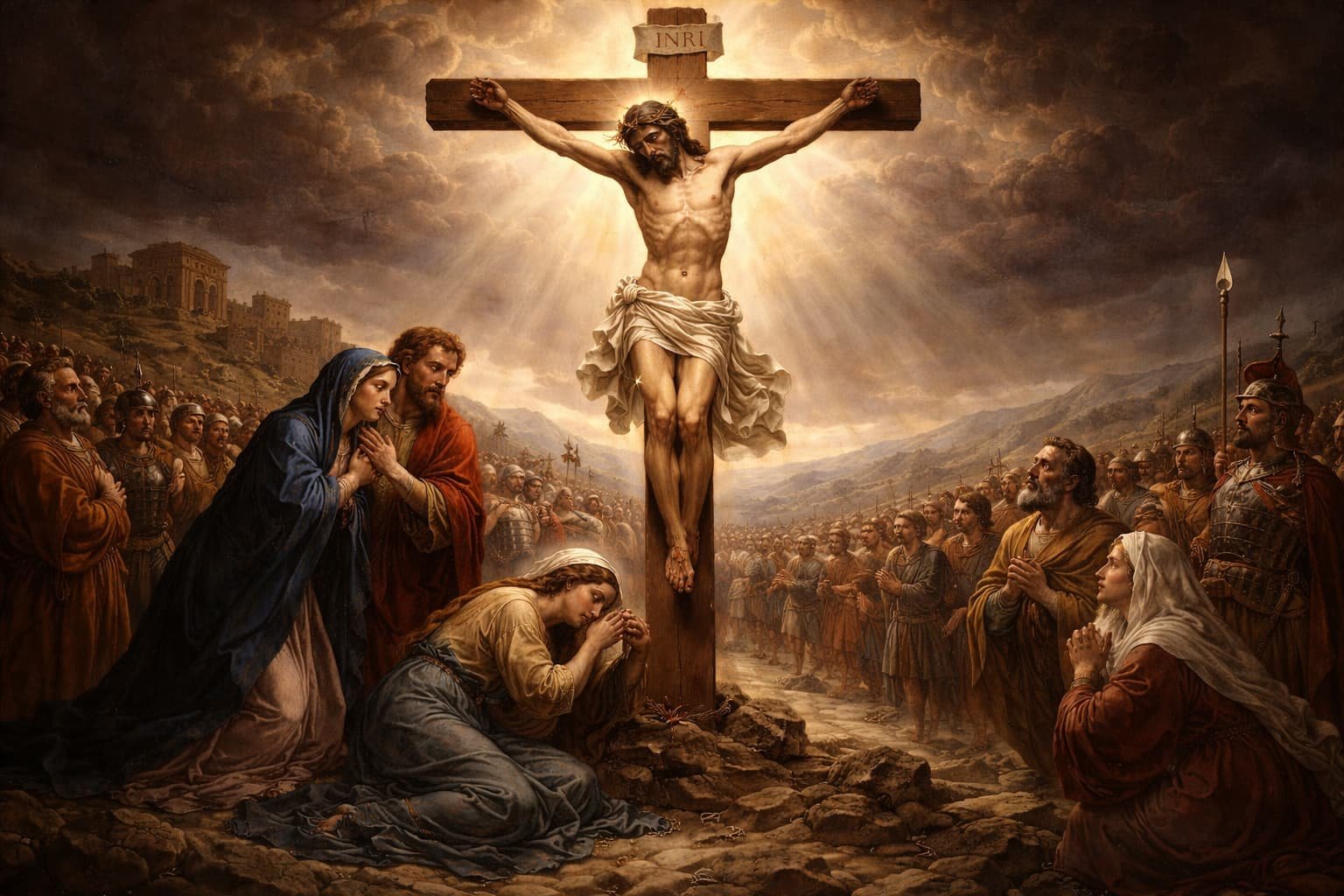
The cross is not an accident of history. It is not merely the tragic death of a moral teacher. It is the centre of God’s redemptive plan for humanity. From the earliest pages of Scripture to the final promises of restoration, the story of redemption consistently points toward the moment when Christ would bear the sins of the world.
This article will explore the theological and biblical foundations that explain why the sacrifice of Christ was necessary, why forgiveness required more than words, and why the cross remains the only foundation of salvation.
Throughout this discussion, we will examine several key themes:
- The holiness and justice of God
- The depth and seriousness of human sin
- The biblical concept of sacrifice
- Why forgiveness required atonement
- The unique role of Christ as the perfect sacrifice
- The victory and meaning of the cross for believers today
Understanding these truths helps us see that the cross was not merely one possible solution. It was the only solution consistent with both the justice and the love of God.
The Holiness of God: The Foundation of the Problem
To understand why the cross was necessary, we must begin with a foundational truth: God is perfectly holy.
The Bible consistently presents God as morally pure, righteous, and completely separated from sin. His holiness is not merely one attribute among many. It is central to His character.
In Scripture we see this clearly expressed:
“Holy, holy, holy is the Lord Almighty; the whole earth is full of his glory.”
Isaiah 6:3
The repetition of the word holy emphasises the absolute purity of God. In biblical language, repetition indicates intensity. God is not merely holy. He is utterly holy.
Holiness means several things:
- God is morally perfect
- God cannot tolerate sin
- God always acts in righteousness and justice
Because of His holiness, God cannot simply overlook evil. Doing so would contradict His own nature.
Consider how human justice works. If a judge knowingly releases a guilty criminal without consequence, society would consider that judge corrupt. Justice requires that wrongdoing be addressed.
In the same way, God’s justice cannot ignore sin. If He did, He would cease to be just.
This creates a profound tension in the biblical story. On one hand, God is perfectly just. On the other hand, He desires to show mercy and save humanity.
The cross resolves this tension.
But before we can understand how it does so, we must first recognise the seriousness of the human problem.
The Reality of Human Sin
Modern culture often treats sin lightly. Many people assume that human beings are fundamentally good and that our mistakes are minor flaws rather than deep moral corruption.
However, the biblical description of humanity is far more serious.
Scripture teaches that sin is universal.
“For all have sinned and fall short of the glory of God.”
Romans 3:23
This statement includes every person who has ever lived, except Christ. Sin is not merely a collection of isolated mistakes. It is a condition that affects the entire human race.
What Is Sin?
In biblical terms, sin involves several dimensions:
- Rebellion against God
- Violation of God’s moral law
- Failure to reflect God’s glory
Sin affects not only actions but also thoughts, motives, and desires.
Jesus made this clear when He explained that hatred in the heart reflects the same root as murder and that lustful desire reflects the same root as adultery.
The problem is therefore deeper than behaviour. It is rooted in the human heart.
The Consequences of Sin
Sin produces serious consequences.
According to Scripture, sin leads to:
- Separation from God
- Spiritual death
- Moral corruption
- Ultimate judgement
The Bible summarises this reality with a striking statement:
“The wages of sin is death.”
Romans 6:23
The word wages suggests something earned. Sin earns death because it represents rebellion against the Creator and Sustainer of life.
This is why the cross becomes necessary. If sin truly leads to death, then forgiveness cannot simply ignore the consequences.
Justice must be satisfied.
The Biblical Pattern of Sacrifice
The idea that sin requires sacrifice appears throughout the Bible long before the crucifixion of Christ.
In fact, the entire sacrificial system of the Old Testament was designed to teach a central truth: sin has a cost.
The First Sacrifice in Scripture
The concept of sacrifice appears very early in the biblical story.
After Adam and Eve sinned in the Garden of Eden, Scripture tells us that God clothed them with garments made from animal skins. This implies the first death in the biblical narrative.
An innocent life was given to cover human shame.
This moment introduces a theme that will continue throughout Scripture: covering sin requires sacrifice.
The Sacrificial System of Israel
Later, under the Law given through Moses, God established a detailed sacrificial system for the nation of Israel.
This system included several types of sacrifices:
- Burnt offerings
- Sin offerings
- Guilt offerings
- Peace offerings
Animals such as lambs, bulls, and goats were offered on the altar as substitutes for the people.
The key principle behind these sacrifices was substitution.
An innocent animal died in the place of the guilty person.
Leviticus expresses this idea clearly:
“For the life of a creature is in the blood, and I have given it to you to make atonement for yourselves on the altar.”
Leviticus 17:11
Blood symbolised life. The shedding of blood represented the giving of life in place of another.
The Limitations of Animal Sacrifices
However, the sacrificial system was never meant to be the final solution.
These sacrifices had limitations:
- They had to be repeated continually
- They could not truly remove sin
- They functioned as temporary coverings
The letter to the Hebrews explains this clearly:
“It is impossible for the blood of bulls and goats to take away sins.”
Hebrews 10:4
If animal sacrifices could not permanently remove sin, what was their purpose?
They served as a foreshadowing of a greater sacrifice yet to come.
The Promise of a Perfect Sacrifice
Throughout the Old Testament, prophets and symbols point forward to a coming figure who would accomplish what the sacrificial system could not.
This future redeemer would bear the sins of the people and bring lasting reconciliation with God.
One of the clearest prophecies appears in Isaiah 53.
The passage describes a suffering servant who would carry the sins of others.
Several remarkable statements appear in this prophecy:
- He would be despised and rejected
- He would bear the sins of many
- He would suffer in the place of others
- His suffering would bring healing and peace
Isaiah writes:
“He was pierced for our transgressions, he was crushed for our iniquities.”
Isaiah 53:5
This prophecy describes substitutionary suffering centuries before the crucifixion occurred.
It prepares the reader for the arrival of the one who would become the final sacrifice.
Why Forgiveness Requires Atonement
At this stage we return to the central question: Why could God not simply forgive sin without the cross?
To answer this, we must understand the concept of atonement.
Atonement refers to the process by which sin is dealt with and reconciliation between God and humanity becomes possible.
True forgiveness does not deny justice. It satisfies justice while extending mercy.
Consider a simple illustration.
If someone destroys another person’s property, forgiveness does not remove the cost of the damage. Someone must still bear the loss.
Either the offender pays, or the one who forgives absorbs the cost.
In the same way, sin creates a moral debt.
The cross demonstrates that God Himself chose to bear that cost.
Through the death of Christ:
- Justice is satisfied
- Sin is judged
- Mercy is extended
The cross therefore reveals both the righteousness and the love of God simultaneously.
Jesus Christ: The Perfect Sacrifice
The entire biblical narrative reaches its climax in the person of Jesus Christ.
Unlike every other human being, Jesus lived a completely sinless life. He perfectly obeyed the will of God and fulfilled the moral law.
Because He was without sin, He did not deserve death.
This made Him uniquely qualified to become the substitute for others.
John the Baptist recognised this truth when he saw Jesus approaching and declared:
“Look, the Lamb of God, who takes away the sin of the world.”
The phrase Lamb of God deliberately connects Jesus with the sacrificial system of the Old Testament.
Just as lambs were offered as sacrifices, Christ would offer Himself as the ultimate sacrifice.
What Makes Christ’s Sacrifice Unique?
Several factors make the sacrifice of Christ fundamentally different from all previous sacrifices.
- His sinless lifeJesus was morally perfect. Because He had no sin of His own, He could bear the sins of others.
- His divine natureChrist is not merely a human teacher or prophet. He is the eternal Son of God who entered human history.
- His voluntary sacrificeJesus willingly gave His life. He repeatedly stated that no one took His life from Him.
- The sufficiency of His sacrificeUnlike animal sacrifices that had to be repeated, the sacrifice of Christ was once and for all.
The letter to the Hebrews summarises this truth by explaining that Christ offered a single sacrifice that permanently accomplished what the old system could only symbolise.
The Meaning of the Cross
The cross communicates several profound truths about God and salvation.
The Cross Reveals the Seriousness of Sin
The suffering and death of Christ demonstrate how seriously God views sin.
If forgiveness could have been accomplished through a lesser means, the cross would not have been necessary.
The fact that Christ endured such suffering reveals the true weight of human rebellion.
The Cross Reveals the Depth of God’s Love
At the same time, the cross reveals the extraordinary love of God.
Rather than abandoning humanity to judgement, God entered history and bore the consequences of sin Himself.
The message of the cross therefore holds together two realities that might otherwise seem incompatible:
- Perfect justice
- Perfect love
The Cross Provides Reconciliation
Through the cross, the barrier between God and humanity is removed.
Sin created separation. The sacrifice of Christ restores relationship.
This reconciliation allows believers to approach God with confidence rather than fear.
The Resurrection: The Vindication of the Cross
The story does not end with the crucifixion.
Three days after His death, Christ rose from the grave. The resurrection serves several crucial purposes.
It confirms that:
- The sacrifice was accepted
- Death was defeated
- Christ truly possesses divine authority
Without the resurrection, the cross would appear as a tragic defeat. With the resurrection, it becomes a decisive victory.
The resurrection demonstrates that the power of sin and death has been broken.
Why the Cross Still Matters Today
More than two thousand years after the crucifixion, the message of the cross remains central to the Christian faith.
It continues to matter for several reasons.
It Provides the Only Foundation for Forgiveness
Human effort cannot remove sin. Moral improvement cannot erase guilt. Religious rituals cannot achieve reconciliation with God.
Only the sacrifice of Christ addresses the problem at its root.
It Transforms the Believer’s Life
The cross does not only forgive. It also transforms.
Those who trust in Christ experience:
- Freedom from guilt
- A restored relationship with God
- The beginning of moral and spiritual renewal
It Provides Hope for the Future
Because the cross deals with sin, believers can look forward to a future restoration of creation.
The victory achieved through Christ’s sacrifice guarantees that evil and death will not have the final word.
Key Reasons the Cross Was Necessary
To summarise the central argument of this article, the cross was necessary because it accomplishes several things that no other event in history could achieve.
The sacrifice of Christ:
- Upholds the justice of God
- Addresses the seriousness of human sin
- Provides a perfect substitute for sinners
- Fulfils the prophetic promises of Scripture
- Offers complete and lasting forgiveness
- Restores the relationship between God and humanity
Without the cross, none of these realities could be fully realised.
Conclusion
The cross stands at the centre of the Christian message because it reveals the deepest truths about God, humanity, and salvation.
It shows us the holiness of God and the seriousness of sin. It exposes the inability of human effort to achieve redemption. At the same time, it reveals a love so profound that God Himself entered human history to bear the consequences of our rebellion.
The necessity of the cross therefore arises from the very nature of God. His justice required that sin be judged. His love desired that sinners be saved.
At the cross, these two realities meet perfectly.
Christ becomes the substitute who bears the penalty of sin so that forgiveness can be freely offered to all who believe.
For this reason, the cross is not merely a symbol of suffering. It is the symbol of redemption, reconciliation, and hope.
Understanding why the cross was necessary allows us to see the depth of God’s plan and the magnitude of the sacrifice that made salvation possible.
And that is why the message of the cross continues to stand at the heart of the Christian faith.