The question of how humanity can approach God has shaped Christian theology from the earliest days of the church. Scripture presents a clear truth that lies at the heart of the Christian message: God is holy and humanity is fallen. Because of this profound separation, reconciliation between God and human beings cannot occur through human effort, religious rituals, or moral achievement alone.
The Bible reveals that God Himself has provided the solution. That solution is Jesus Christ. He stands as the mediator between God and humanity, the one who restores the broken relationship and makes it possible for people to come confidently into the presence of God.
Understanding Jesus as mediator is essential for grasping the meaning of salvation, grace, forgiveness, and eternal life. Without His mediating work, humanity would remain separated from God. Through Him, however, the way to God is opened.
This article explores the biblical meaning of Jesus as mediator, why humanity needs a mediator, how Christ fulfils this role, and what it means for believers today.
The Meaning of a Mediator in the Bible
Before exploring the role of Jesus as mediator, it is important to understand what the word mediator means in the biblical sense.
A mediator is someone who stands between two parties in order to restore peace, resolve conflict, or establish agreement. In legal and relational contexts, a mediator works to bring reconciliation where division exists.
In Scripture, the idea of mediation appears in several contexts. A mediator is someone who:
- Represents one party to another
- Reconciles two sides that are separated
- Establishes covenant relationships
- Brings peace where conflict exists
In the relationship between God and humanity, the need for mediation arises because of sin. Humanity has rebelled against God, and that rebellion created a barrier that human beings cannot remove by their own power.
The Bible expresses this truth clearly in 1 Timothy 2:5:
“For there is one God and one mediator between God and mankind, the man Christ Jesus.”
This verse captures the entire foundation of the Christian understanding of mediation. Jesus alone stands between God and humanity as the one who reconciles both.
Why Humanity Needs a Mediator
To understand the importance of Jesus as mediator, we must first understand the problem that makes mediation necessary.
The problem is sin.
The Separation Caused by Sin
From the earliest chapters of Scripture, the Bible teaches that humanity was created for fellowship with God. Adam and Eve walked in harmony with their Creator in the Garden of Eden.
However, when sin entered the world, that harmony was broken.
Sin created several realities:
- Separation from God
- Spiritual death
- Guilt and condemnation
- The inability to restore the relationship through human effort
Isaiah 59:2 expresses this clearly:
“Your iniquities have separated you from your God.”
This separation is not merely symbolic. It reflects the deep spiritual divide between a holy God and sinful humanity.
The Holiness of God
God is perfectly holy. His nature is pure, righteous, and completely without sin.
Because of this holiness:
- Sin cannot dwell in His presence
- Justice must address wrongdoing
- Moral perfection defines His character
Humanity, on the other hand, is marked by moral failure. Even the most sincere religious effort cannot remove the stain of sin.
Romans 3:23 states:
“For all have sinned and fall short of the glory of God.”
This universal condition creates a dilemma. Humanity cannot approach God without mediation.
The Limits of Human Effort
Throughout history people have attempted many paths to reach God. These efforts include:
- Religious rituals
- Moral discipline
- Philosophical wisdom
- Spiritual practices
- Personal righteousness
While these may reflect a genuine search for meaning, they cannot solve the problem of sin.
The gap between God and humanity is not simply a moral improvement problem. It is a spiritual reconciliation problem.
Only a mediator appointed by God can restore the relationship.
Early Examples of Mediation in the Old Testament
Long before the coming of Christ, the Old Testament provided glimpses of the concept of mediation.
Several figures served in limited mediating roles that pointed forward to a greater mediator.
Moses as a Mediator
One of the clearest early examples of mediation is Moses.
When God established His covenant with Israel at Mount Sinai, Moses acted as the intermediary between God and the people.
His role included:
- Delivering God’s law to Israel
- Speaking to God on behalf of the people
- Interceding when Israel sinned
For example, after the people worshipped the golden calf, Moses pleaded with God to show mercy.
This intercession reflects an important aspect of mediation. The mediator stands between two parties and seeks reconciliation.
However, Moses himself was not perfect. His mediation was temporary and incomplete.
The Priests of Israel
Another form of mediation appeared through the priesthood.
The priests offered sacrifices on behalf of the people. These sacrifices symbolised atonement for sin and allowed the people to remain in covenant relationship with God.
The system involved several elements:
- Animal sacrifices
- Temple worship
- Priestly intercession
- Ritual cleansing
The high priest held a particularly significant role. Once each year, he entered the Most Holy Place on the Day of Atonement to present a sacrifice for the sins of the nation.
Yet even this system revealed its own limitations.
The sacrifices had to be repeated continually. They did not permanently remove sin. They pointed forward to something greater that God would one day provide.
The Prophetic Promise of a Greater Mediator
Throughout the Old Testament, the prophets began to speak of a coming figure who would bring true reconciliation.
This promised servant of God would:
- Bear the sins of the people
- Establish a new covenant
- Bring lasting peace with God
Isaiah 53 describes this suffering servant who carries the sins of many.
These prophetic images prepared the way for the arrival of Jesus Christ.
Jesus Christ as the Perfect Mediator
The New Testament presents Jesus as the fulfilment of everything the earlier mediators anticipated.
Unlike previous mediators, Jesus uniquely qualifies to bridge the gap between God and humanity.
Fully God and Fully Human
The most important reason Jesus can serve as mediator is His unique identity.
He is both:
- Fully God
- Fully human
Because He shares the nature of God, He perfectly represents God to humanity.
Because He became human, He also represents humanity before God.
This dual identity makes Him the only one who can truly stand between both sides.
John 1:14 describes this profound mystery:
“The Word became flesh and made his dwelling among us.”
God entered human history in the person of Jesus Christ.
The Sinless Life of Christ
Another essential qualification for mediation is moral perfection.
If the mediator himself were guilty of sin, he would require mediation as well.
Jesus alone lived a completely sinless life.
The New Testament repeatedly affirms this truth:
- He committed no sin
- No deceit was found in Him
- He perfectly obeyed the Father
Because of His perfect righteousness, Jesus could represent humanity without sharing in its guilt.
The Sacrifice That Reconciles Humanity to God
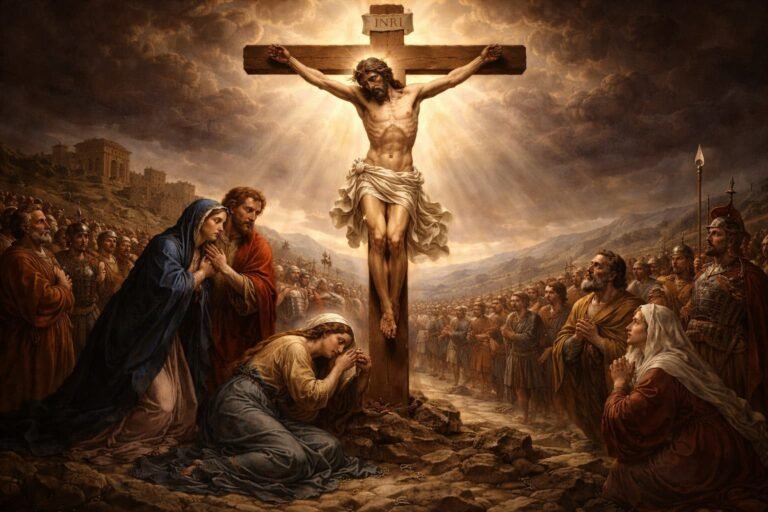
The most important aspect of Christ’s mediation occurred through His death on the cross.
The cross is where justice and mercy meet.
God’s justice requires that sin be judged. His love desires that humanity be forgiven.
At the cross, Jesus took upon Himself the penalty that belonged to humanity.
Key truths about the cross include:
- Jesus bore the sins of the world
- He suffered the judgement sin deserves
- His sacrifice satisfied divine justice
- Forgiveness became possible for those who trust in Him
Through this sacrifice, the barrier between God and humanity was removed.
2 Corinthians 5:19 expresses this clearly:
“God was reconciling the world to himself in Christ.”
The Resurrection and Continuing Mediation
The mediation of Jesus did not end with His death.
The resurrection confirmed that His sacrifice was accepted and that sin and death were defeated.
After His resurrection, Jesus ascended to heaven where He continues to intercede for believers.
This ongoing intercession means that His mediating role continues today.
He stands before the Father on behalf of those who belong to Him.
The New Covenant Established Through Christ
Another essential aspect of Christ’s mediating work is the establishment of a new covenant between God and humanity.
A covenant is a binding relationship based on promises.
Throughout Scripture, God forms covenants with His people. The covenant through Moses established the law and sacrificial system.
However, the New Testament explains that Jesus introduced a new covenant that fulfils and surpasses the old one.
Key Features of the New Covenant
The new covenant brings several transformative realities:
- Complete forgiveness of sin
- Direct relationship with God
- Transformation of the heart
- The indwelling presence of the Holy Spirit
Unlike the earlier covenant, which relied on repeated sacrifices, the new covenant is founded on the once for all sacrifice of Christ.
Because Jesus serves as mediator of this covenant, believers enjoy a relationship with God based on grace rather than law.
Access to God Through Christ
One of the most remarkable consequences of Christ’s mediation is direct access to God.
Under the old system, only the high priest could enter the Most Holy Place, and even then only once a year.
After the death of Jesus, the temple curtain was torn from top to bottom. This event symbolised that the barrier separating humanity from God’s presence had been removed.
Because of Christ:
- Believers can approach God with confidence
- Prayer becomes direct communion with the Father
- The presence of God is no longer restricted to a temple
Hebrews 4:16 encourages believers with these words:
“Let us then approach God’s throne of grace with confidence.”
The Exclusive Role of Christ as Mediator
The Bible emphasises that the mediating role of Jesus is unique and exclusive.
He is not one mediator among many. He is the only mediator provided by God.
Why Only One Mediator Exists
Several reasons explain why Christ alone fulfils this role.
- Only Jesus is both divine and human.
- Only Jesus lived a completely sinless life.
- Only Jesus offered a perfect sacrifice for sin.
- Only Jesus conquered death through resurrection.
Because of these realities, no other figure in history can perform the same role.
The Sufficiency of Christ’s Work
Another important aspect of this teaching is the complete sufficiency of Christ’s mediation.
Nothing needs to be added to His work.
Human effort cannot improve upon it. Religious rituals cannot complete it. Personal merit cannot strengthen it.
Christ’s sacrifice fully accomplishes reconciliation with God.
Believers therefore rely entirely on Him rather than on their own achievements.
The Practical Meaning of Christ’s Mediation for Believers
The doctrine of Jesus as mediator is not only a theological concept. It has profound implications for everyday Christian life.
Understanding His mediation transforms how believers approach God, understand forgiveness, and live in faith.
Confidence in Prayer
Because Jesus stands as mediator, believers can pray with confidence.
Prayer is not an attempt to persuade a distant God to listen. It is a conversation made possible through Christ’s work.
Through Him, believers have access to the Father.
Assurance of Forgiveness
Christ’s mediation also brings assurance of forgiveness.
When believers confess their sins, they do not rely on their own worthiness. They rely on the completed work of Christ.
His sacrifice fully satisfies the requirements of justice.
Freedom from Fear
Without mediation, approaching God would be terrifying for sinful humanity.
Through Jesus, however, believers approach God not with fear but with trust.
Christ’s presence as mediator means that God receives His people with grace.
A Call to Reconciliation with Others
Finally, the mediation of Christ inspires believers to pursue reconciliation with others.
Because God has reconciled humanity to Himself through Christ, believers are called to reflect that reconciliation in their relationships.
This includes:
- Forgiving others
- Seeking peace
- Restoring broken relationships
Conclusion: The Bridge That Restores Humanity to God
The message of Jesus as mediator lies at the centre of the Christian gospel.
Humanity was separated from God by sin and incapable of restoring the relationship on its own. In His love, God provided the perfect mediator in the person of Jesus Christ.
Through His sinless life, sacrificial death, and victorious resurrection, Jesus removed the barrier between God and humanity.
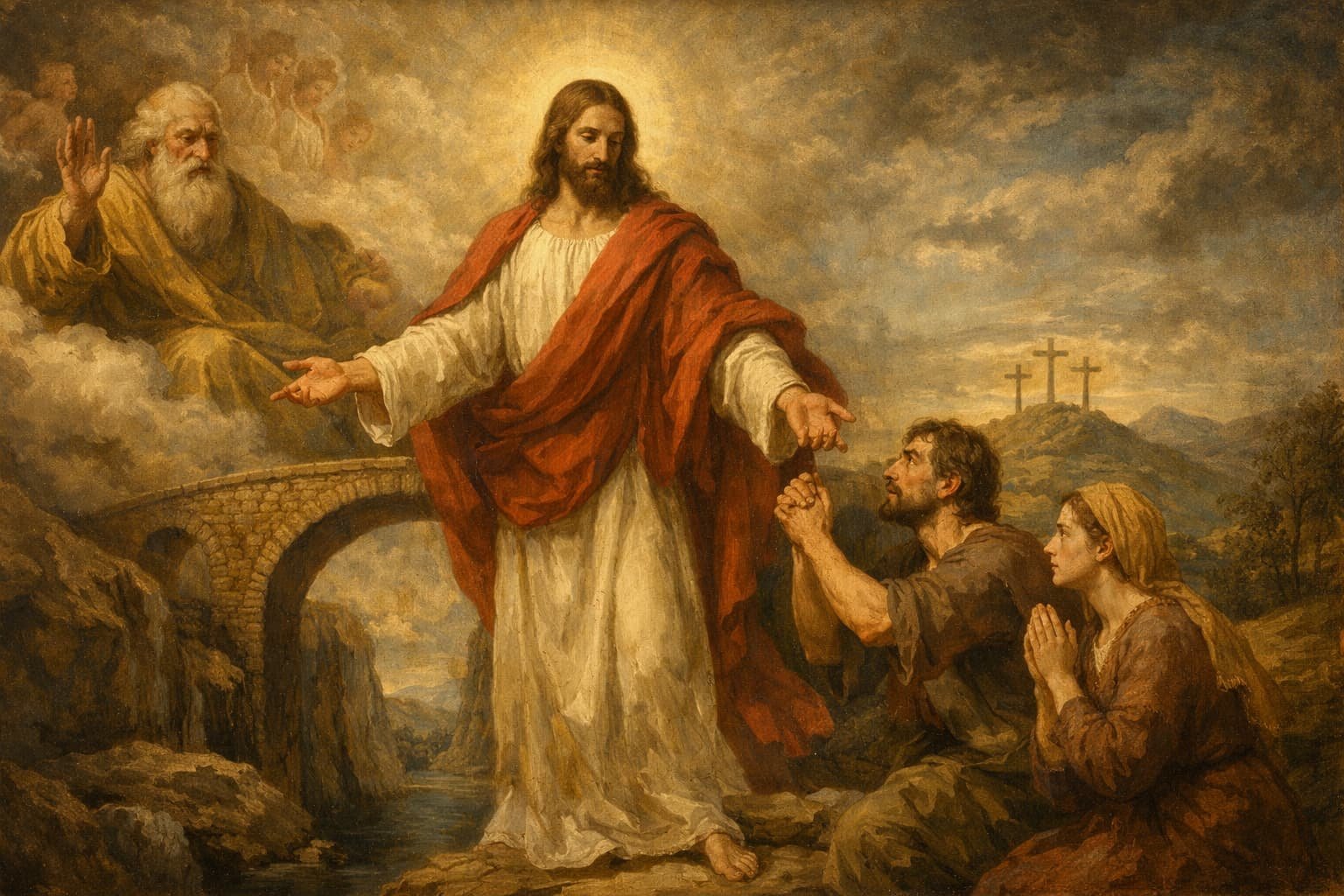
He stands as the bridge that restores fellowship between the Creator and His creation.
Because of Him:
- Forgiveness becomes possible
- Access to God is opened
- Eternal life is offered
- Reconciliation becomes reality
For every person who seeks a restored relationship with God, the answer is not found in human effort but in the mediator God has already provided.
Jesus Christ remains the living bridge between heaven and earth, inviting all who trust in Him to come confidently into the presence of God.