Few teachings in Christianity are as central, profound, and sometimes misunderstood as the doctrine of the Trinity. Many people who encounter the Christian faith for the first time ask an important question: How can God be one and yet three at the same time? At first glance this idea may appear confusing or even contradictory. Yet the doctrine of the Trinity lies at the heart of Christian belief about who God truly is.
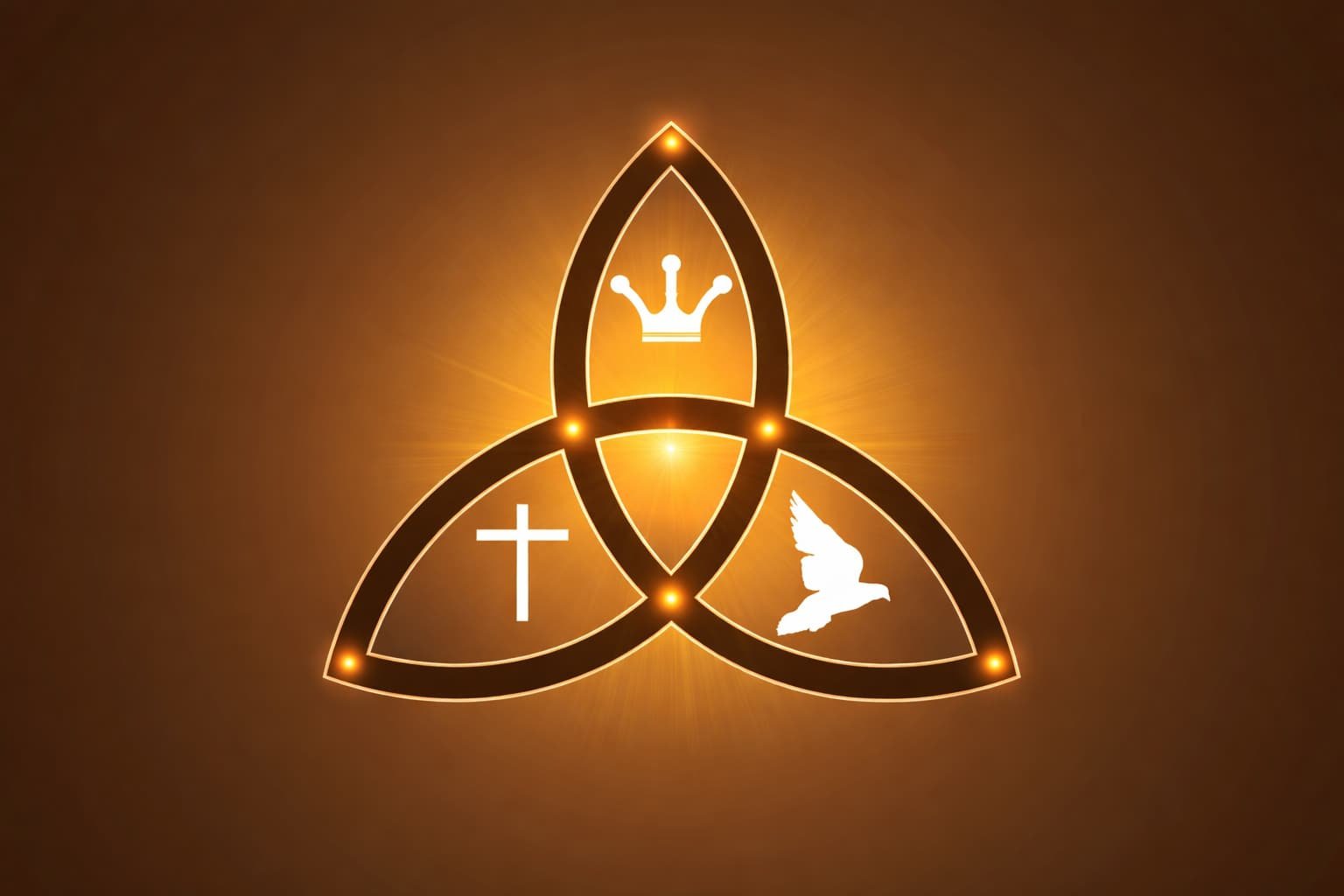
The Trinity teaches that there is one God who eternally exists as three distinct persons: the Father, the Son, and the Holy Spirit. These three persons are not three separate gods, nor are they merely three different roles played by one person. Instead, they are three distinct persons who share the same divine nature and essence.
Understanding the Trinity is not simply an abstract theological exercise. It shapes how Christians understand creation, salvation, prayer, worship, and the relationship between God and humanity. The Father sends the Son. The Son redeems the world. The Holy Spirit dwells within believers and transforms their lives. Every aspect of the Christian life flows from this divine relationship.
This guide has been written especially for beginners who want a clear and biblical introduction to the Trinity. We will explore what the Trinity means, where it comes from in the Bible, why it matters, and how Christians throughout history have explained this profound mystery.
By the end of this guide you will understand:
- What the Trinity actually means
- Why Christians believe God is Father, Son, and Holy Spirit
- How the Bible reveals the Trinity
- Common misunderstandings about the Trinity
- Why this doctrine is essential to Christian faith
Let us begin by exploring the most important foundation of the Trinity: the belief that there is only one God.
The Foundation: There Is Only One God
Before discussing the Trinity, it is essential to understand the foundation upon which it stands. Christianity firmly teaches that there is only one true God.
This belief is known as monotheism, meaning the belief in one God rather than many gods.
The Bible repeatedly affirms this truth.
In the Old Testament we read:
“Hear, O Israel: The Lord our God, the Lord is one.”
Deuteronomy 6:4
This declaration became one of the most important statements of faith for the people of Israel. It affirmed that the God of Israel was the only true God.
Throughout the Old Testament God clearly rejects the idea of multiple gods:
- Isaiah 45:5 says, “I am the Lord, and there is no other; apart from me there is no God.”
- Isaiah 44:6 says, “I am the first and I am the last; apart from me there is no God.”
The New Testament continues this same teaching.
For example:
“There is one God and one mediator between God and mankind, the man Christ Jesus.”
1 Timothy 2:5
This means that the doctrine of the Trinity does not teach three gods. Christianity has never believed in three gods. The belief in the Trinity must always begin with the truth that God is one.
At the same time, the Bible reveals something surprising. While affirming that God is one, Scripture also reveals that the Father is God, the Son is God, and the Holy Spirit is God.
This raises an important question.
If there is only one God, how can the Father, Son, and Holy Spirit each be fully divine?
The answer is found in the doctrine of the Trinity.
What the Trinity Actually Means
The word Trinity does not appear directly in the Bible, but the concept is clearly present throughout Scripture.
The term Trinity comes from a Latin word that means three in one.
In simple terms, the doctrine of the Trinity can be summarised in three statements:
- There is one God.
- The Father, the Son, and the Holy Spirit are distinct persons.
- Each person is fully and equally God.
These three statements together form the biblical teaching of the Trinity.
Let us look at each part more closely.
One God
Christianity teaches that there is only one divine being. God is not divided into parts, and there are not multiple gods sharing power.
God is one in essence, nature, and being.
Three Distinct Persons
Within the one divine nature there exist three distinct persons:
- The Father
- The Son
- The Holy Spirit
These persons are not identical to one another. The Father is not the Son. The Son is not the Spirit. The Spirit is not the Father.
Yet they live in perfect unity and relationship.
Fully God
Each person of the Trinity possesses the fullness of the divine nature.
This means:
- The Father is fully God
- The Son is fully God
- The Holy Spirit is fully God
But together they are one God, not three.
This relationship is difficult to fully grasp because it is unique to God. Nothing in creation perfectly reflects it. Nevertheless, Scripture consistently reveals this truth.
The Trinity Revealed in the Bible
Although the word Trinity is not used in Scripture, the Bible gradually reveals this reality through many passages.
The doctrine becomes clearer as the story of the Bible unfolds.
Hints in the Old Testament
The Old Testament strongly emphasises that God is one, yet there are moments where hints of plurality appear.
For example, in Genesis 1:26 God says:
“Let us make mankind in our image, in our likeness.”
The use of the plural words us and our has long attracted attention.
Another example appears in Genesis 1:2 where the Spirit of God is described as hovering over the waters during creation.
Later passages speak of the Word of God as an active and powerful force through which creation occurs.
These passages do not fully explain the Trinity, but they prepare the reader for a deeper revelation that appears in the New Testament.
The Trinity at the Baptism of Jesus
One of the clearest moments where the Trinity appears together occurs at the baptism of Jesus.
Matthew 3:16 to 17 describes this event:
- Jesus is baptised in the Jordan River.
- The Spirit of God descends like a dove.
- The Father speaks from heaven.
Three persons appear simultaneously:
- The Son standing in the water
- The Spirit descending
- The Father speaking from heaven
This moment powerfully demonstrates that the Father, Son, and Holy Spirit are distinct yet united.
The Great Commission
Another important passage appears at the end of the Gospel of Matthew.
Jesus commands his followers:
“Go and make disciples of all nations, baptising them in the name of the Father and of the Son and of the Holy Spirit.”
Matthew 28:19
Notice that Jesus speaks of one name, yet three persons.
This statement strongly supports the doctrine of the Trinity.
Apostolic Teaching
The apostles also spoke about the Father, Son, and Holy Spirit together.
For example, 2 Corinthians 13:14 says:
“The grace of the Lord Jesus Christ, and the love of God, and the fellowship of the Holy Spirit be with you all.”
This blessing reflects the early Christian understanding of God as Father, Son, and Holy Spirit.
Understanding the Three Persons of the Trinity
To better understand the Trinity, it is helpful to examine each person individually.
The Father
The Father is often described as the source or origin within the Trinity.
He is the one who:
- Creates the world
- Sends the Son into the world
- Sends the Holy Spirit to believers
The Father loves the Son and delights in him.
Jesus often prayed to the Father and spoke about his relationship with him.
For example, in John 17 Jesus prays:
“Father, glorify your Son, that your Son may glorify you.”
This shows the personal relationship that exists within the Trinity.
The Son
The Son refers to Jesus Christ, who entered the world as a human being.
Christians believe that Jesus is both fully God and fully human.
The Gospel of John begins with these famous words:
“In the beginning was the Word, and the Word was with God, and the Word was God.”
John 1:1
Later John writes:
“The Word became flesh and made his dwelling among us.”
John 1:14
These verses teach that Jesus is the eternal Word who became human.
Jesus performed works that only God can do:
- He forgave sins
- He commanded nature
- He raised the dead
- He accepted worship
Through his death and resurrection, Jesus provided salvation for humanity.
The Holy Spirit
The Holy Spirit is the third person of the Trinity.
He is not an impersonal force or energy. The Bible describes the Spirit as a personal being who teaches, guides, and comforts believers.
Jesus promised that after his departure the Spirit would come to help his followers.
In John 14:26 Jesus says:
“The Advocate, the Holy Spirit, whom the Father will send in my name, will teach you all things.”
The Holy Spirit plays many roles in the life of believers:
- Convicting people of sin
- Giving spiritual life
- Guiding believers into truth
- Empowering Christians for service
- Producing spiritual growth
Through the Spirit, God is present with his people today.
Why the Trinity Matters
Some people wonder why the Trinity is important. Why not simply believe that God exists and leave it at that?
The truth is that the Trinity shapes many essential Christian beliefs.
Understanding God’s Nature
The Trinity reveals that God is relational.
Before the creation of the world, the Father, Son, and Holy Spirit existed in perfect love and fellowship. This means that love is not something God learned after creating humanity. Love has always existed within God himself.
Understanding Salvation
Salvation involves all three persons of the Trinity.
The Father plans salvation.
The Son accomplishes salvation through his death and resurrection.
The Holy Spirit applies salvation to believers by transforming their hearts.
Understanding Prayer
Christians often pray to the Father, through the Son, and by the Holy Spirit.
This reflects the way the Trinity works in the life of believers.
Understanding Christian Life
The presence of the Holy Spirit within believers means that God is not distant. He actively works in the lives of those who follow him.
The Trinity therefore shapes the entire Christian experience.
Common Misunderstandings About the Trinity
Because the Trinity is difficult to understand, several misunderstandings have appeared throughout history.
Here are some of the most common ones.
The Trinity Is Not Three Gods
Christianity does not teach polytheism.
There is only one God.
The Trinity Is Not One Person Playing Three Roles
Some people imagine God as one person who appears in three different forms at different times.
For example:
- Sometimes as the Father
- Sometimes as the Son
- Sometimes as the Spirit
However, the Bible clearly shows the Father, Son, and Holy Spirit existing simultaneously.
The Trinity Is Not Three Parts of God
Another misunderstanding is that each person is one third of God.
This is also incorrect.
Each person is fully God, not a fraction of God.
Illustrations That Try to Explain the Trinity
Many illustrations have been used to explain the Trinity. While they can be helpful, none of them perfectly capture the reality of God.
Some common examples include:
The Sun
The sun can be described in three ways:
- The star itself
- The light it produces
- The heat it gives
These three are distinct yet inseparable.
Water
Water can exist in three states:
- Liquid
- Ice
- Vapour
However, this illustration is limited because water does not exist in all three states at the same time under normal conditions.
The Human Mind
Some thinkers have compared the Trinity to aspects of the human mind such as memory, understanding, and will.
Again, this is only a limited analogy.
These examples may help us think about the Trinity, but none of them fully explain the mystery of God.
The Trinity Throughout Christian History
The doctrine of the Trinity did not suddenly appear centuries later. It developed as Christians carefully studied the teachings of Scripture.
Early believers sought to explain how the Father, Son, and Holy Spirit could all be divine while maintaining belief in one God.
Important church gatherings in the early centuries helped clarify these teachings and defend them against misunderstandings.
Through these discussions, the church articulated the doctrine that God is one essence in three persons.
This teaching has remained central to Christian belief ever since.
Living in Light of the Trinity
Understanding the Trinity is not only about theology. It also affects everyday faith.
Here are several ways the Trinity shapes Christian life.
Worship
Christian worship celebrates the Father, the Son, and the Holy Spirit.
Songs, prayers, and teaching often reflect this threefold relationship.
Community
Because God exists in eternal relationship, believers are called to live in loving community with one another.
The unity and love within the Trinity becomes a model for Christian relationships.
Mission
The Trinity is also connected to the mission of the church.
- The Father sends
- The Son redeems
- The Spirit empowers
Believers are invited to participate in this mission by sharing the message of Christ with the world.
Conclusion
The doctrine of the Trinity stands at the centre of Christian faith. It teaches that the one true God eternally exists as Father, Son, and Holy Spirit.
Although this truth stretches the limits of human understanding, it reveals the depth and beauty of God’s nature.
Through the Trinity we see a God who is not distant or solitary but relational, loving, and active in the world.
The Father created the world and loves humanity.
The Son entered history to redeem and restore what was broken.
The Holy Spirit continues to work in the hearts of believers today.
Together they reveal the fullness of who God is.
For those beginning to explore Christianity, the Trinity may feel mysterious. Yet it is also profoundly meaningful. It shows that the Christian faith is rooted in a living relationship with a God who invites people into fellowship with him.
Understanding the Trinity is therefore not only about learning a doctrine. It is about discovering the nature of the God who calls humanity into a relationship of faith, hope, and love.